United Kingdom (GBP)

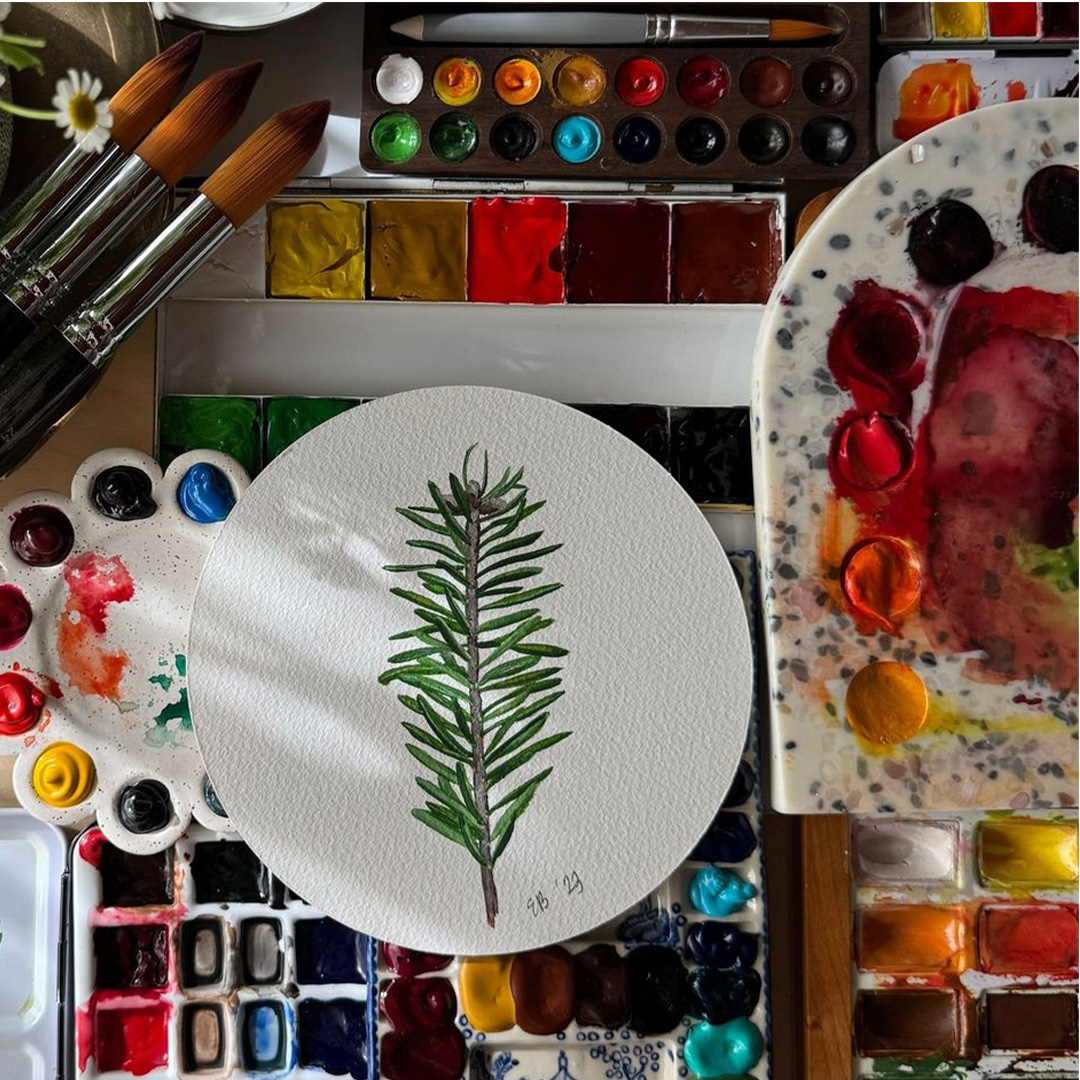
When a watercolour palette is used frequently, colours will almost inevitably mix between the pans. Light shades in particular, such as yellow, easily become muddy from darker pigments and lose their bright clarity. Luckily, it’s easy to freshen up both the watercolour pans and the palette itself with a few simple tricks. Here’s how to do it.
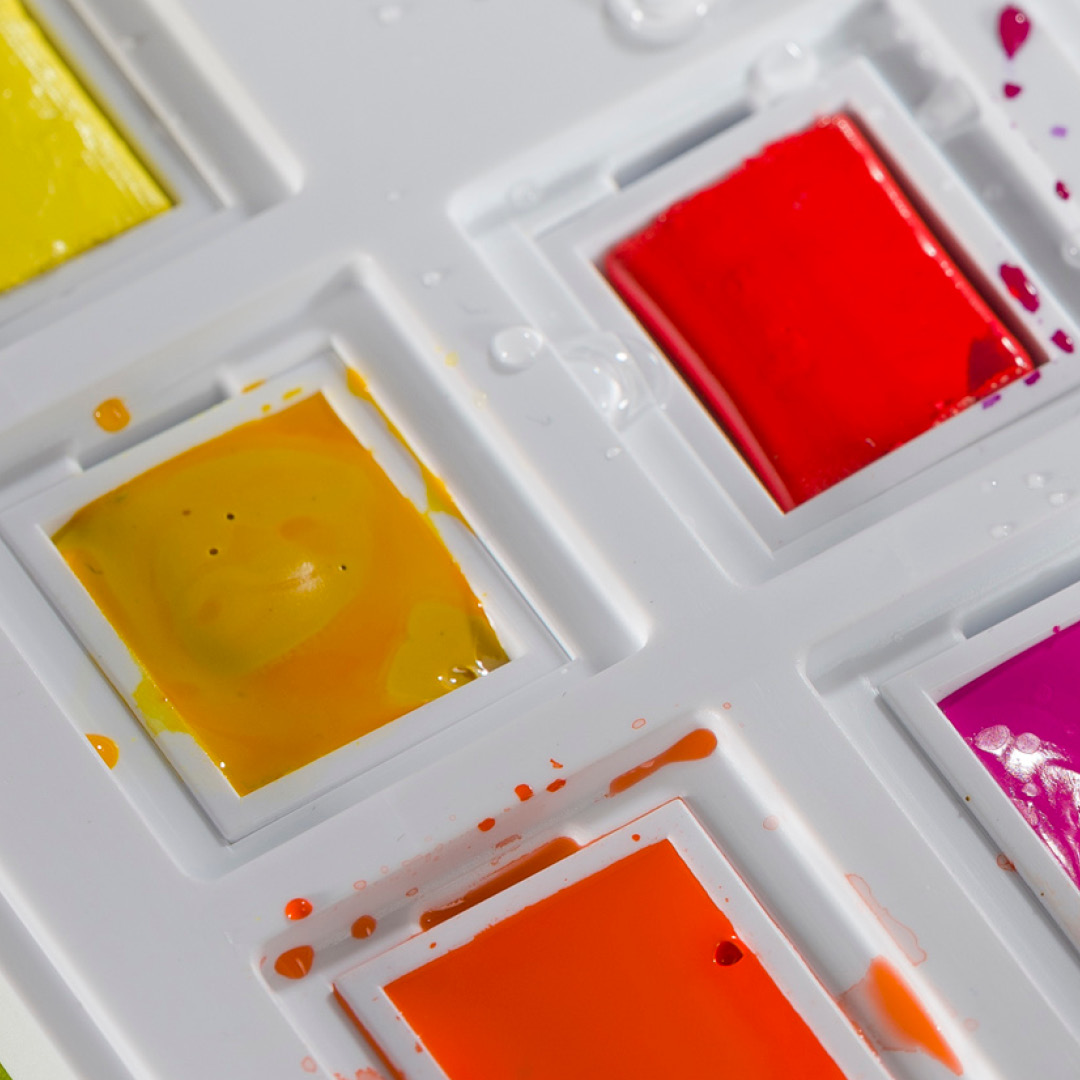
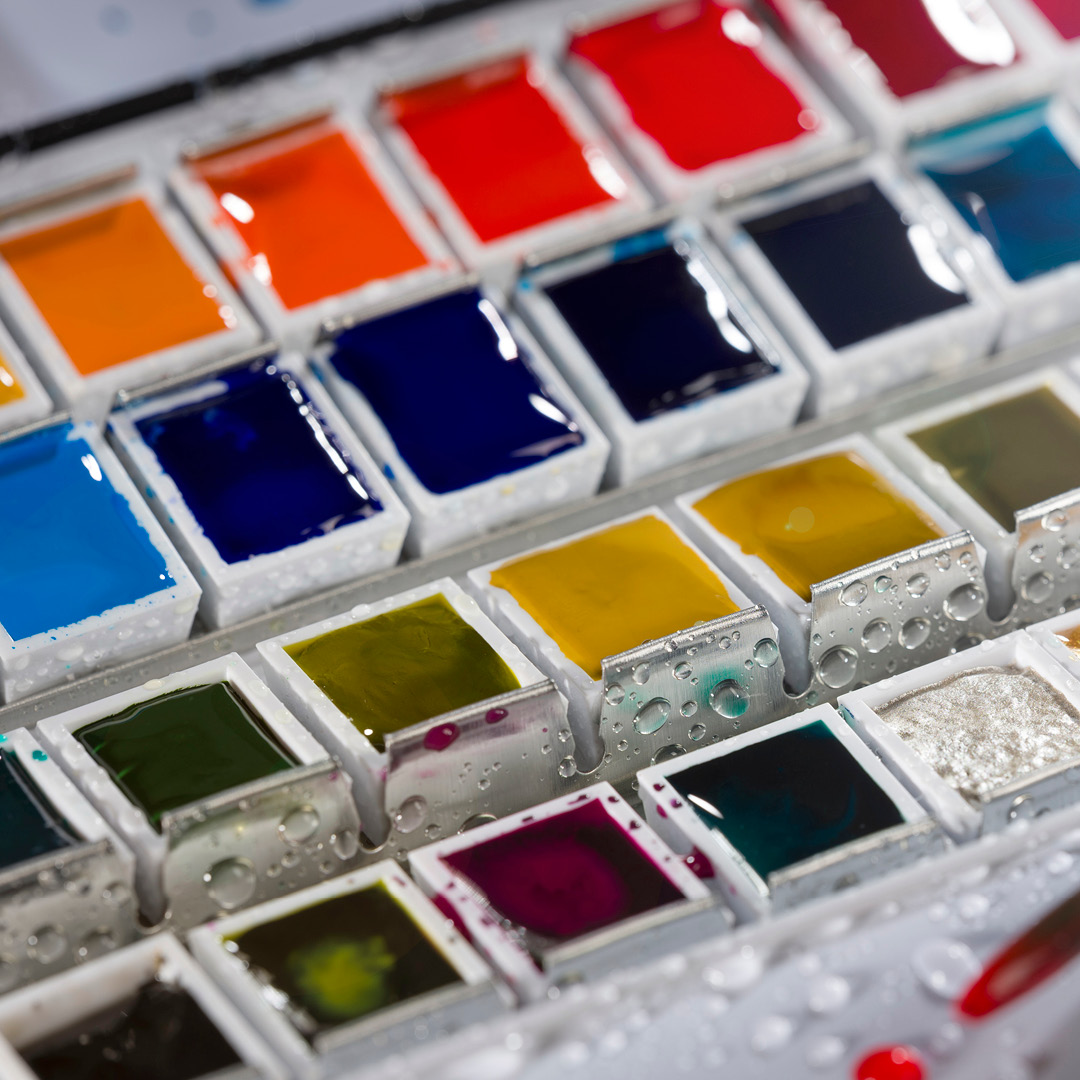
Cleaning watercolour pans: step by step
Most of the time, it’s enough to clean the lightest colours, as dark pigments show up most clearly there. Yellow is usually the shade that gets dirty the fastest.
- Moisten the pan with a few drops of clean water or a light spray.
- Let the water sit for a few seconds so the top layer of paint softens.
- Gently wipe the surface with a clean, damp brush, cotton bud, cloth or paper towel.
- Repeat if needed until the colour looks clearer again.
You can also remove the pan itself and quickly rinse it under running water. Then wipe the sides with a damp cloth to remove any paint residue collected around the edges.
Avoid using sharp objects to scrape away paint, as this can damage the watercolour pan.
Deep cleaning the entire palette: step by step
If the palette has become very stained or sticky, it can be worth cleaning the entire inside from time to time.
- First, remove the watercolour pans from the palette. Use something blunt, such as a butter knife or tweezers, to carefully lift them out.
- Soak the palette in warm water for a few minutes if the paint residue is stubborn.
- Then rinse the palette and wipe it clean with a cloth or paper towel.
- Put the pans back once everything has dried.
Tips for keeping your colours cleaner for longer
It’s impossible to avoid colour mixing completely, especially if you paint often. However, a few simple habits can help keep your colours cleaner and reduce the risk of muddy shades, particularly with light colours such as yellow.
- Rinse your brush thoroughly between colours. Dark pigments left in the brush are the most common cause of dirty watercolour pans.
- Use two water containers. One for rinsing out pigments and one with clean water for the final rinse.
- Wipe yellow pans after use. A little paper towel or a damp brush is often enough to keep the colour brighter.
- Complement with tube watercolours. Perfect if you want completely clean and intense yellows, or other light shades.
- Keep two yellow pans if you use yellow frequently. Many watercolour artists use one yellow for mixing and keep another as clean as possible for bright, intense yellow details.
And most importantly: a little colour mixing in the palette is completely normal. Watercolour palettes almost always develop a bit of charming chaos over time.


Watercolour →
Brushes →
Pads →