United Kingdom (GBP)

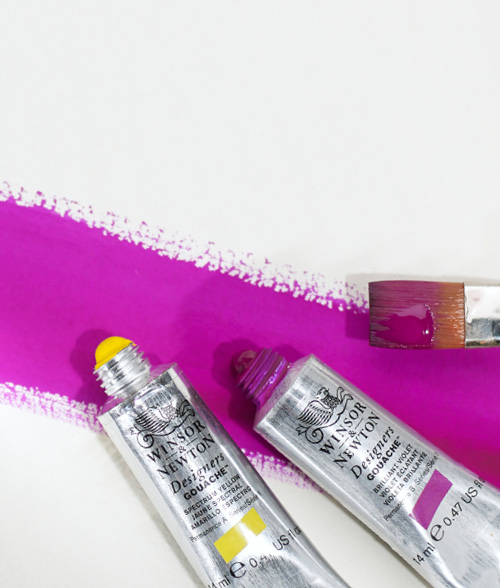
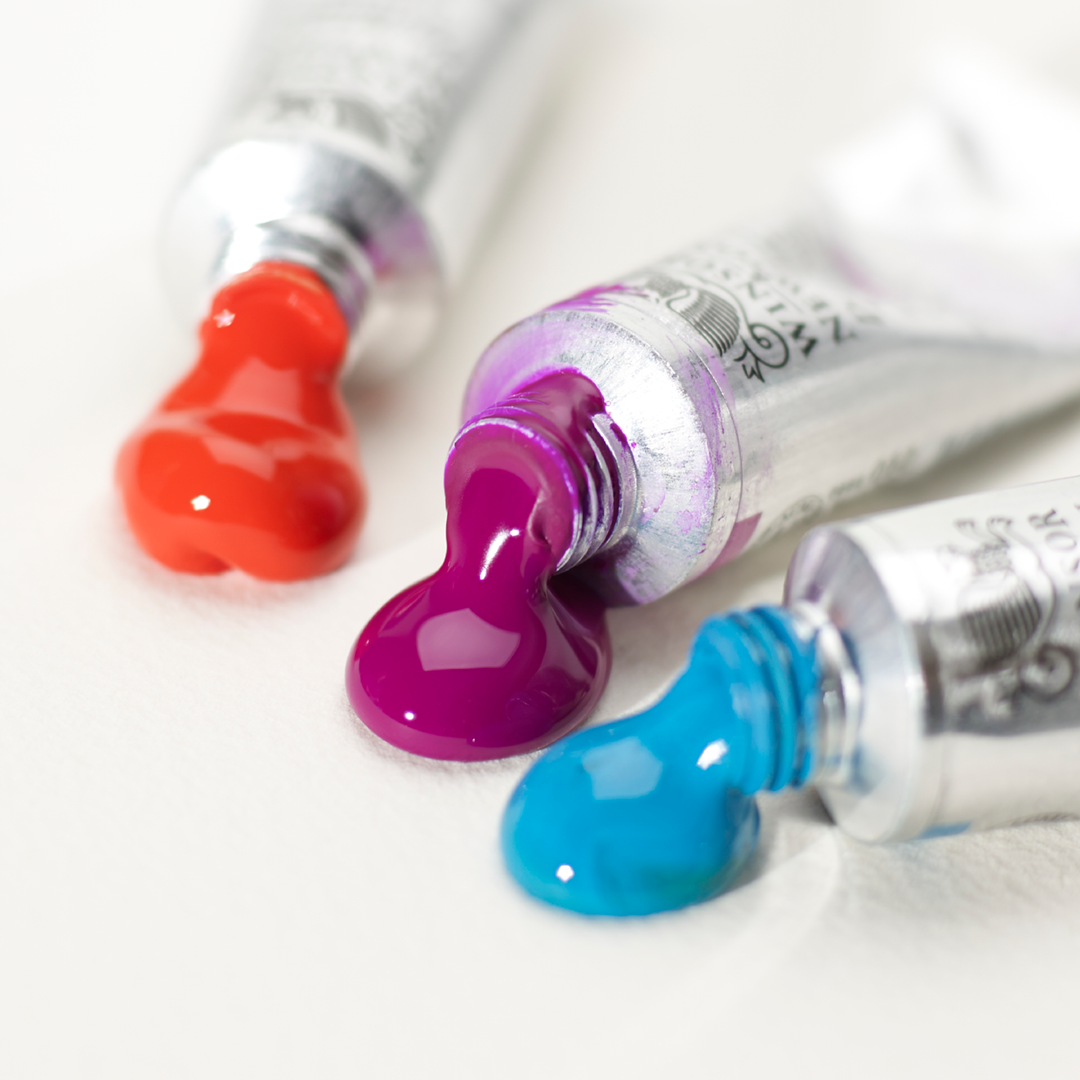
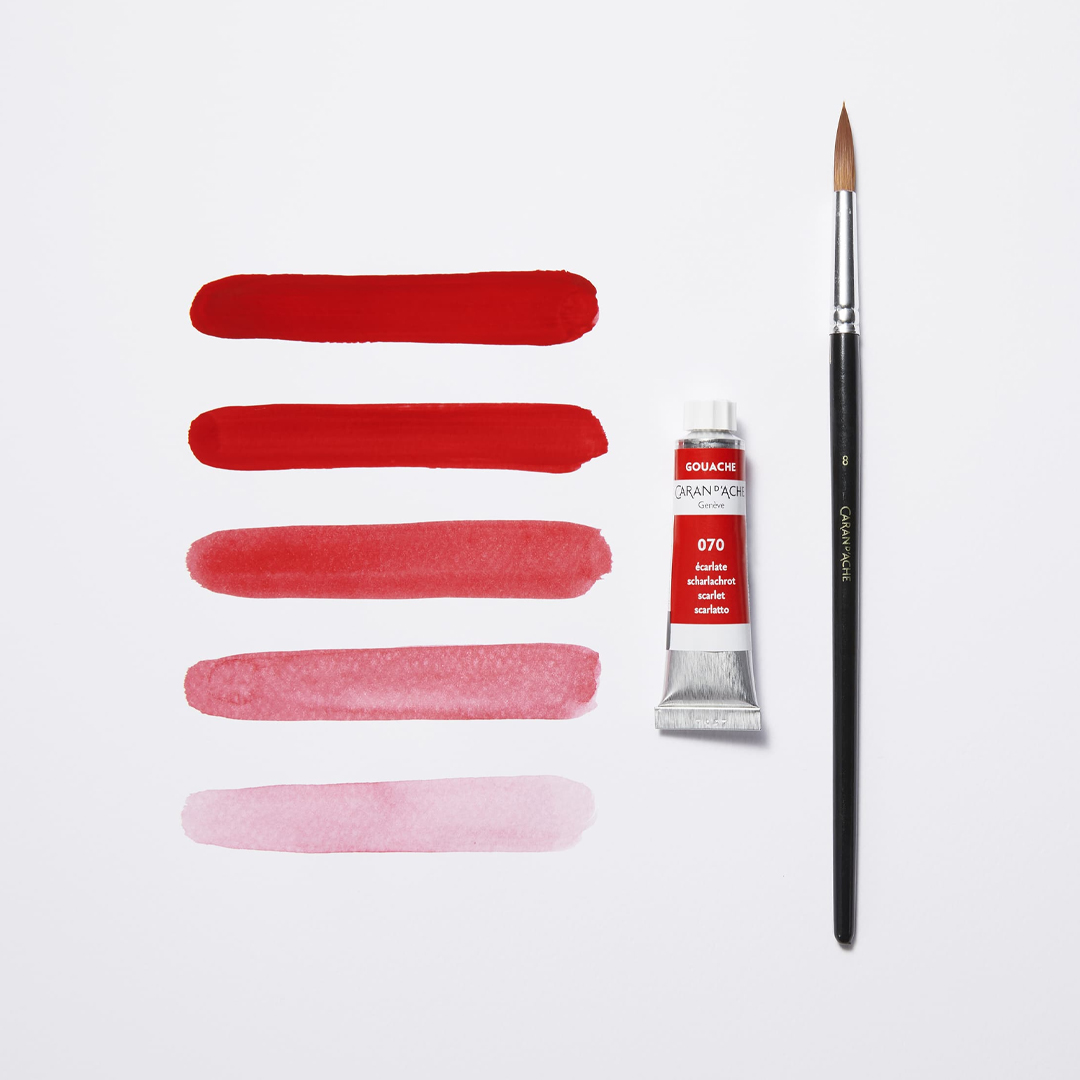
Gouache is a favourite among many thanks to its combination of water solubility and a unique opaque, matte finish. The paint offers high pigmentation, rich colour payoff and a creamier consistency that allows you to work in both transparent and fully opaque layers.
Thanks to its flexibility and ease of use, gouache is suitable for both beginners and experienced creatives working in illustration, design and expressive painting. In this guide, we’ll explore what gouache is, how the paint works, which materials are best suited for it, and what sets gouache apart from watercolour and acrylic paint.
What is gouache paint?
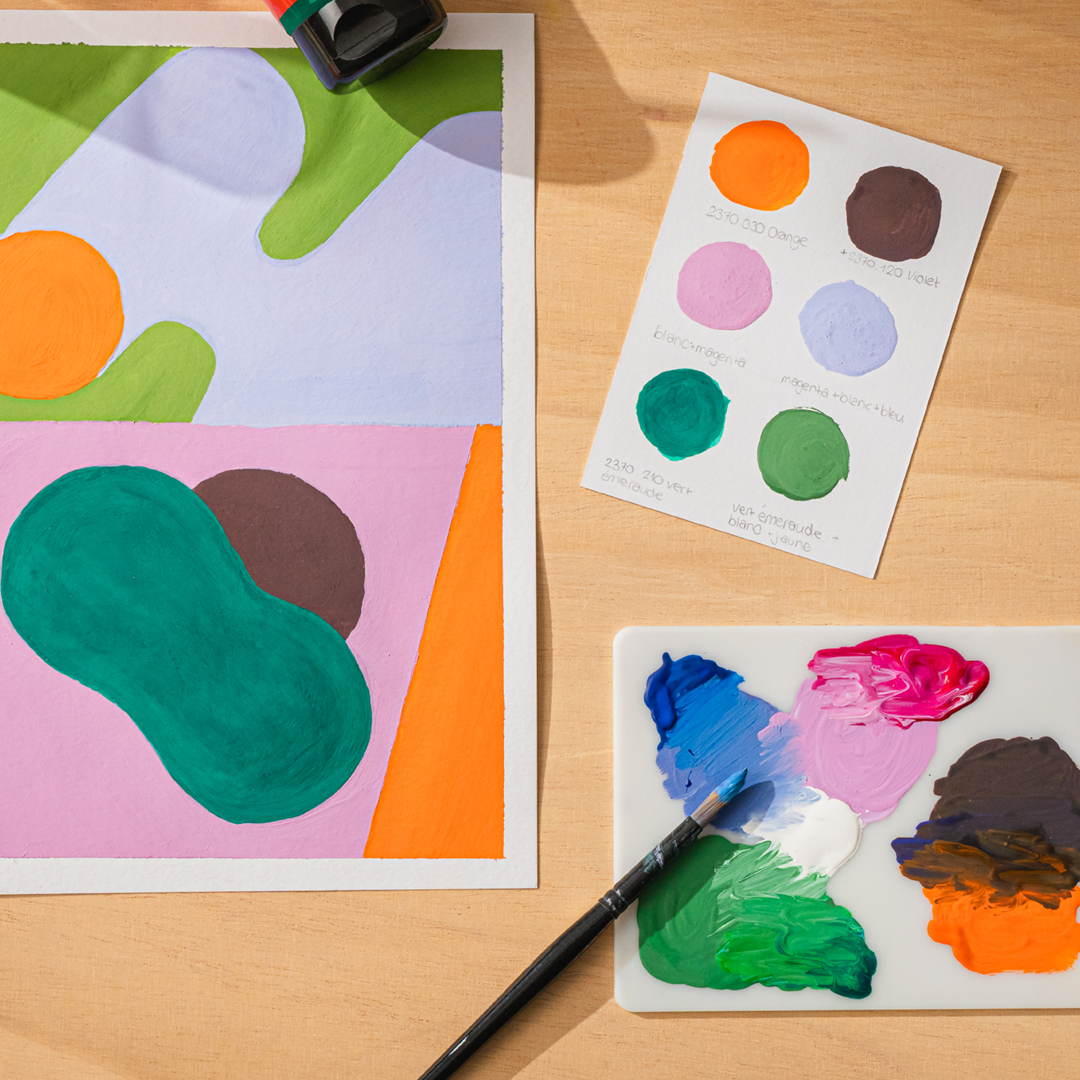
Gouache is an opaque water-based paint with a matte finish and strong colour payoff. The technique is often used in illustration, design and expressive painting thanks to the ability to work in both transparent and fully opaque layers.
This type of paint has been used for centuries and became especially popular in commercial illustration and poster art long before digital creation took over. Today, gouache is used by everyone from professional illustrators to hobby artists who appreciate its soft, handmade and slightly graphic look.
What does gouache paint contain?
Gouache is similar to traditional watercolour but is designed to be more opaque and covering in appearance. The paint contains several components that together give gouache its characteristic matte surface, rich colours and high opacity.
- Pigment: Gives the paint its colour and intensity. Gouache often contains a high pigment load to create strong and even colour areas.
- Gum arabic: A common binder that holds the pigments together and keeps the paint water-soluble even after drying.
- Water: Used to achieve the right consistency and makes it possible to dilute gouache while painting.
- Chalk or other fillers: Help make the paint more opaque and covering compared to regular watercolour.
Why gouache is a favourite for many
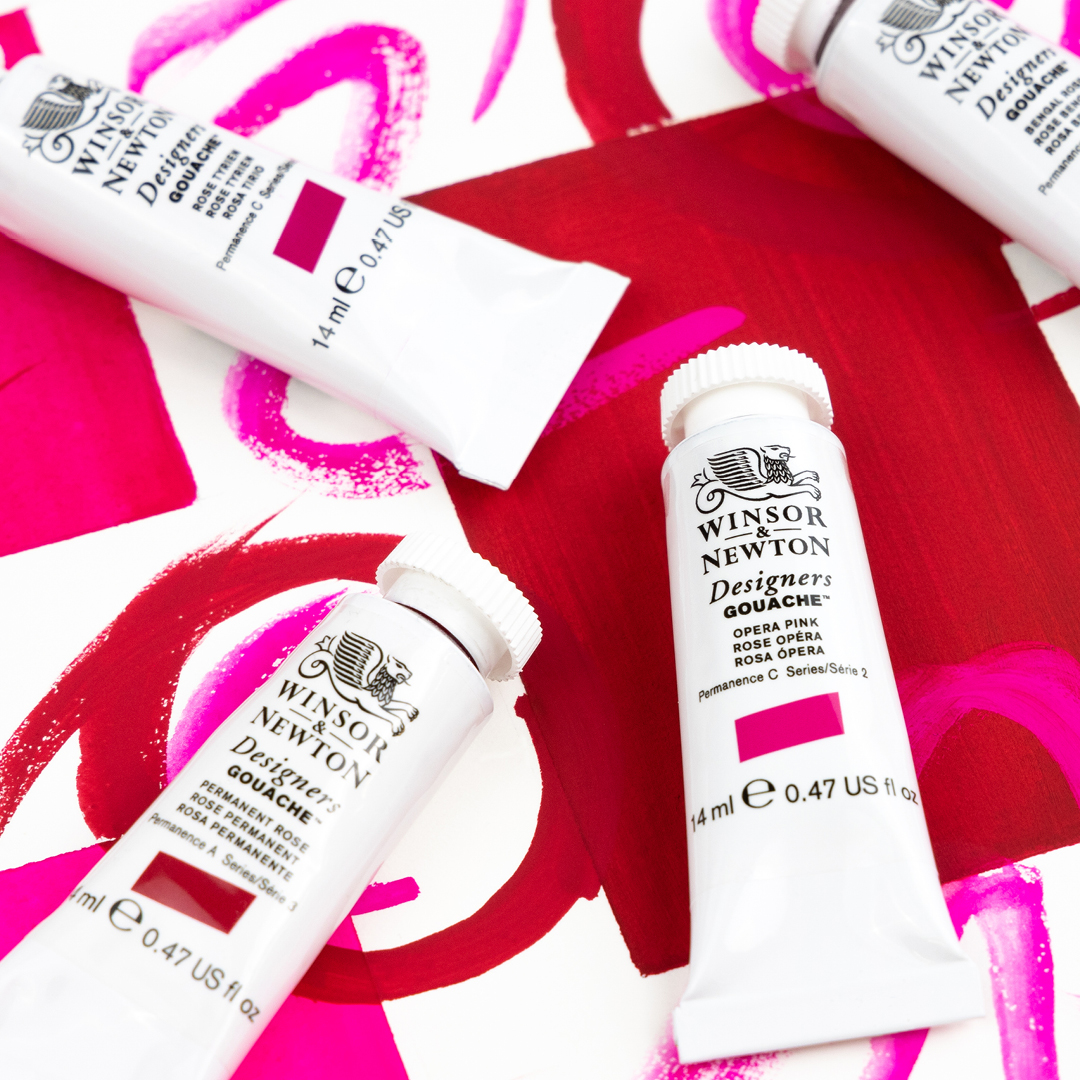
Gouache has become popular thanks to its combination of bold colours, high opacity and characteristic matte finish. Unlike glossier paints, gouache reflects very little light once dry, creating soft and even colour surfaces with an almost velvety appearance. The colours often feel deep and vibrant while the painting itself takes on a calm, handmade look appreciated by many illustrators and creatives.
The technique also feels unusually flexible. Gouache can be used both transparently and opaquely depending on how much water is added, and lighter colours can be painted over darker layers. For many beginners, gouache therefore feels less “final” than watercolour, for example. You can adjust, paint over and continue experimenting without every brushstroke needing to be perfect straight away. It’s this exact combination that makes so many people fall in love with gouache. A little graphic, a little painterly and very easy to keep exploring.
What is gouache paint used for?
Gouache is an unusually versatile medium used in everything from illustration and design to art, journaling and creative hobby projects. The technique is especially well suited for working with bold colour areas, matte surfaces and a more handmade aesthetic. Since the paint can be used both transparently and fully opaquely, it’s possible to create many different styles and results. Here are some common styles and techniques where gouache works particularly well.
Illustration and design
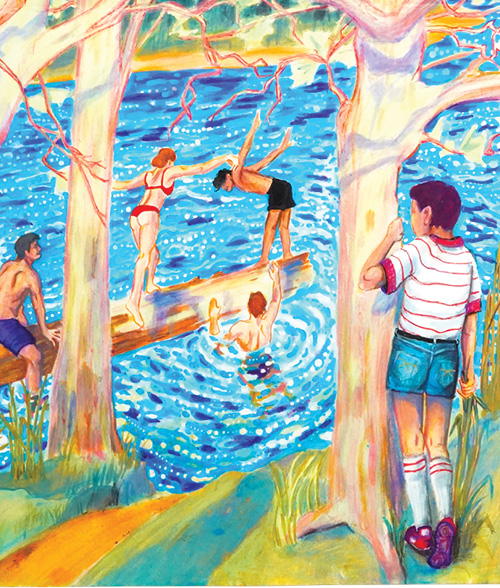
Gouache has long been popular among illustrators and designers thanks to its smooth colour surfaces and intense colours. The matte finish also means colours photograph and reproduce beautifully without distracting reflections, which once made the technique common in poster art, book covers and advertising illustration. Even today, gouache is widely used in modern illustration, especially by creatives who want to maintain a more analogue and lively feel in their work.
Sketchbooks and creative projects
Many people use gouache in sketchbooks, art journals and smaller creative projects because the technique is easy to pick up and work with intuitively. The paint works well for both quick colour studies and more detailed paintings, and it’s easy to combine loose brushstrokes with sharp shapes and fine details. Since gouache can be reactivated with water, the technique often feels less rigid than many other paint types. There’s room to experiment, change direction and continue building along the way.
Mixed media
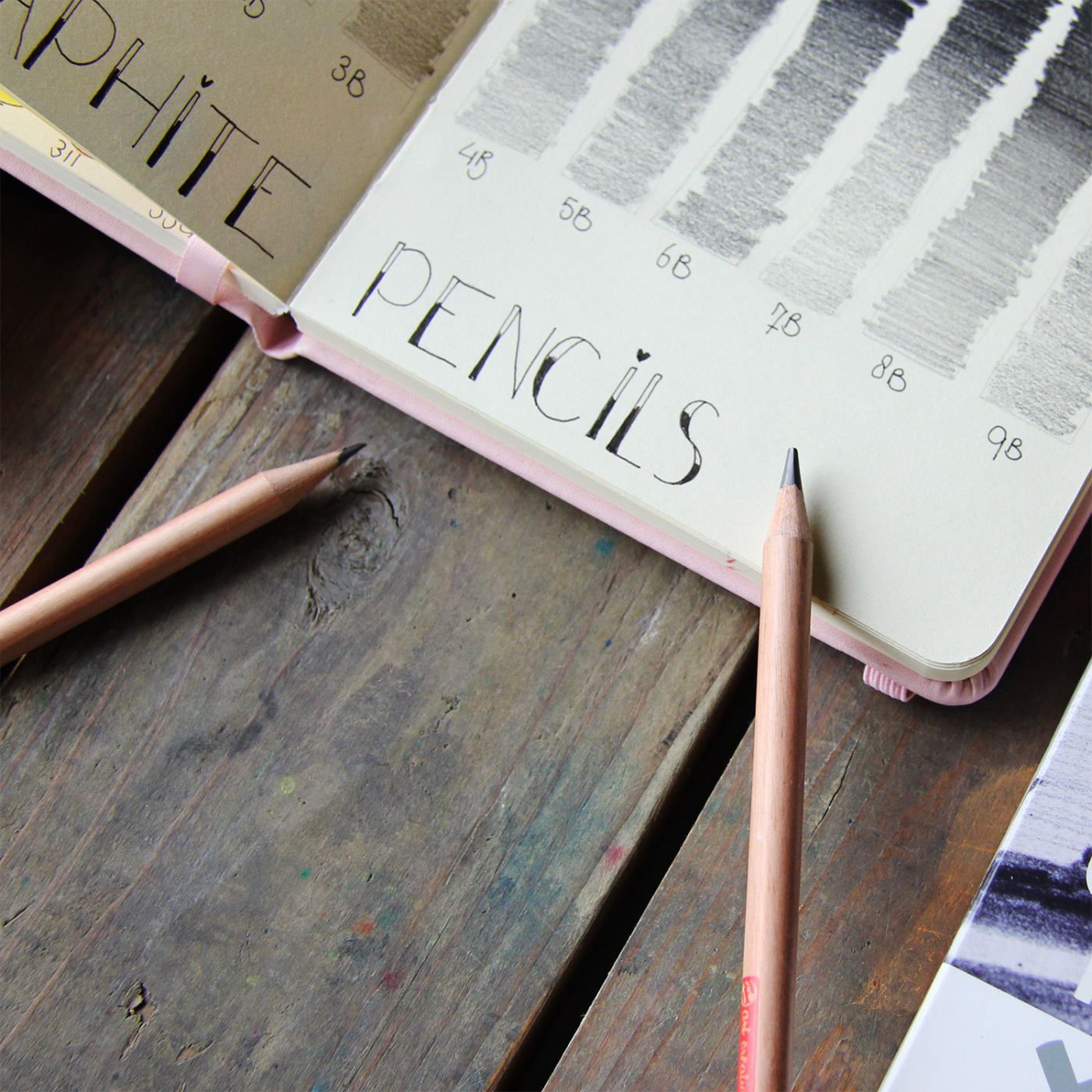
Gouache also works very well alongside other materials and techniques. Many combine the paint with coloured pencils, graphite, ink or watercolour to create more varied textures and expressions. The opaque surface also makes it easy to add details on top of other layers, making gouache a popular medium within mixed media and experimental art practices.
Different types of gouache paint
Gouache comes in several different varieties and qualities, and which one suits you best depends a lot on how you want to work!
Gouache in a tube or pan?
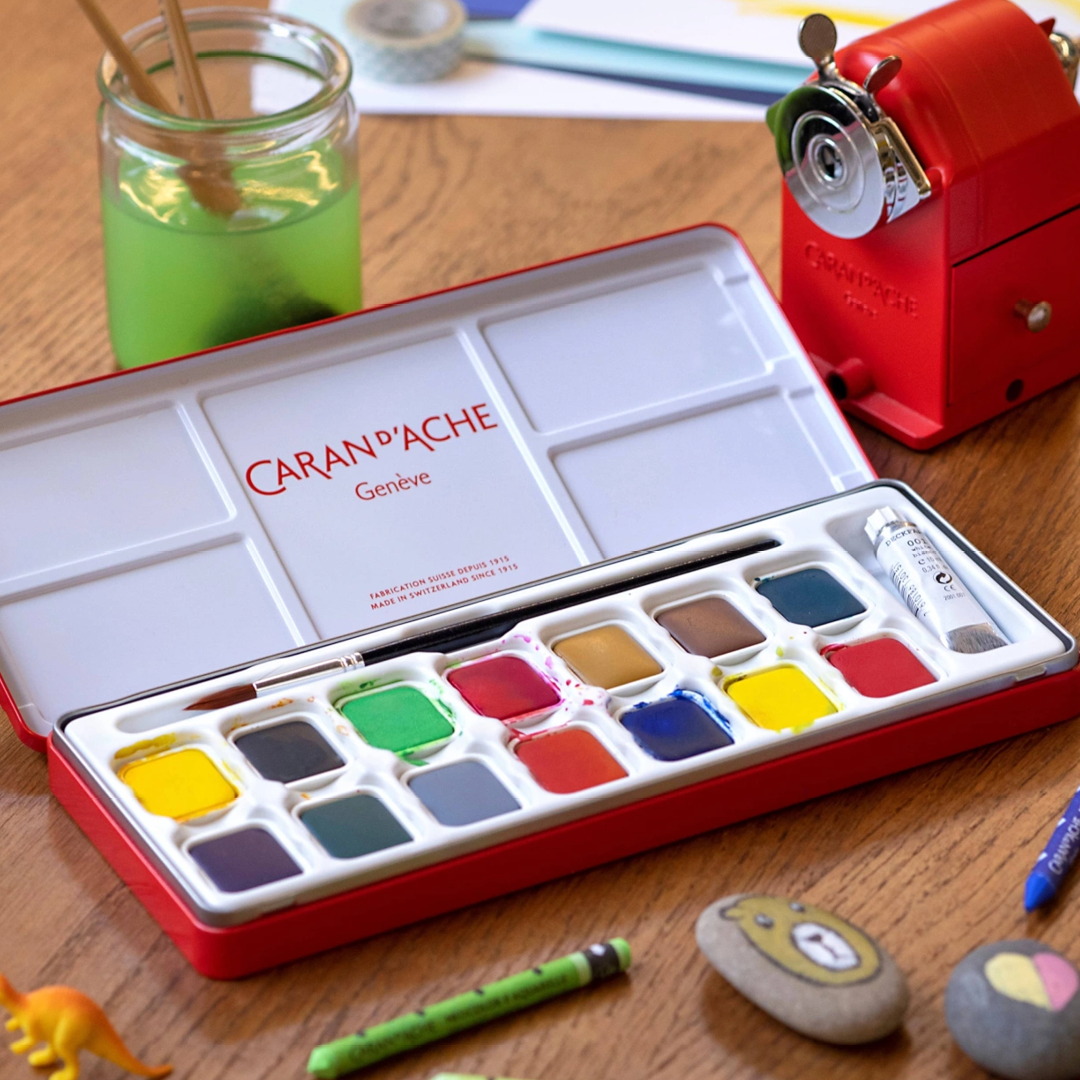
Gouache is most often sold in tubes, but it is also available in pans or cakes that resemble watercolour paints. Tube gouache usually has a soft and creamy consistency that makes it easy to mix larger amounts of paint and work with smooth, opaque surfaces. It is also the type most illustrators and artists use. Gouache in pan form is more compact and easy to bring along, making the format popular for sketchbooks, travel and quicker paintings. The paint is activated with water directly in the pan and often feels a little closer to watercolour. Which format works best is mostly about working style. Tubes are often better for larger paintings and opaque layers, while pans are convenient when you want a portable and easily accessible set.
Cheap or expensive gouache?
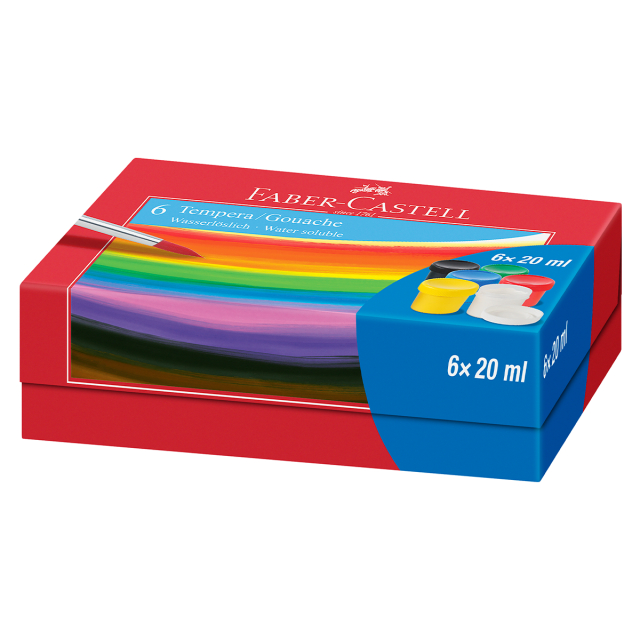
There is a wide range of paints in different price levels. More expensive paints have higher quality, thicker consistency and better pigments. They are easier to mix with watercolour paint or use in mixed media projects. Cheaper gouache paints can sometimes be a little thin and runny, and do not have the same opacity. Several layers may be needed to achieve a covering colour. Often, cheaper paints are only available in ready-made sets, which means you cannot choose your favourite colours.
Gouache paint for children
Gouache is also a popular choice for children and younger creatives because the paint is water-based, easy to use and simple to wash off many surfaces. Its high opacity also makes it easy to achieve clear and colourful results without needing to work in many layers. For younger children, simpler hobby or school-grade gouache paints are often used, designed for creative play and larger projects.
What is the best gouache paint?
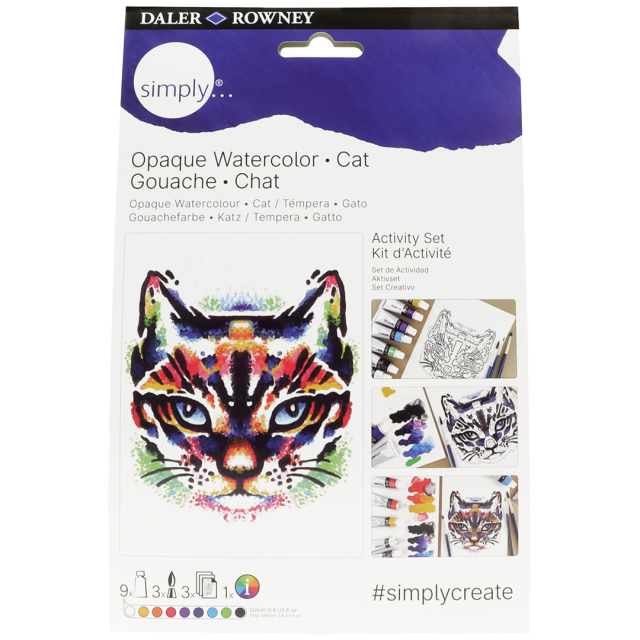
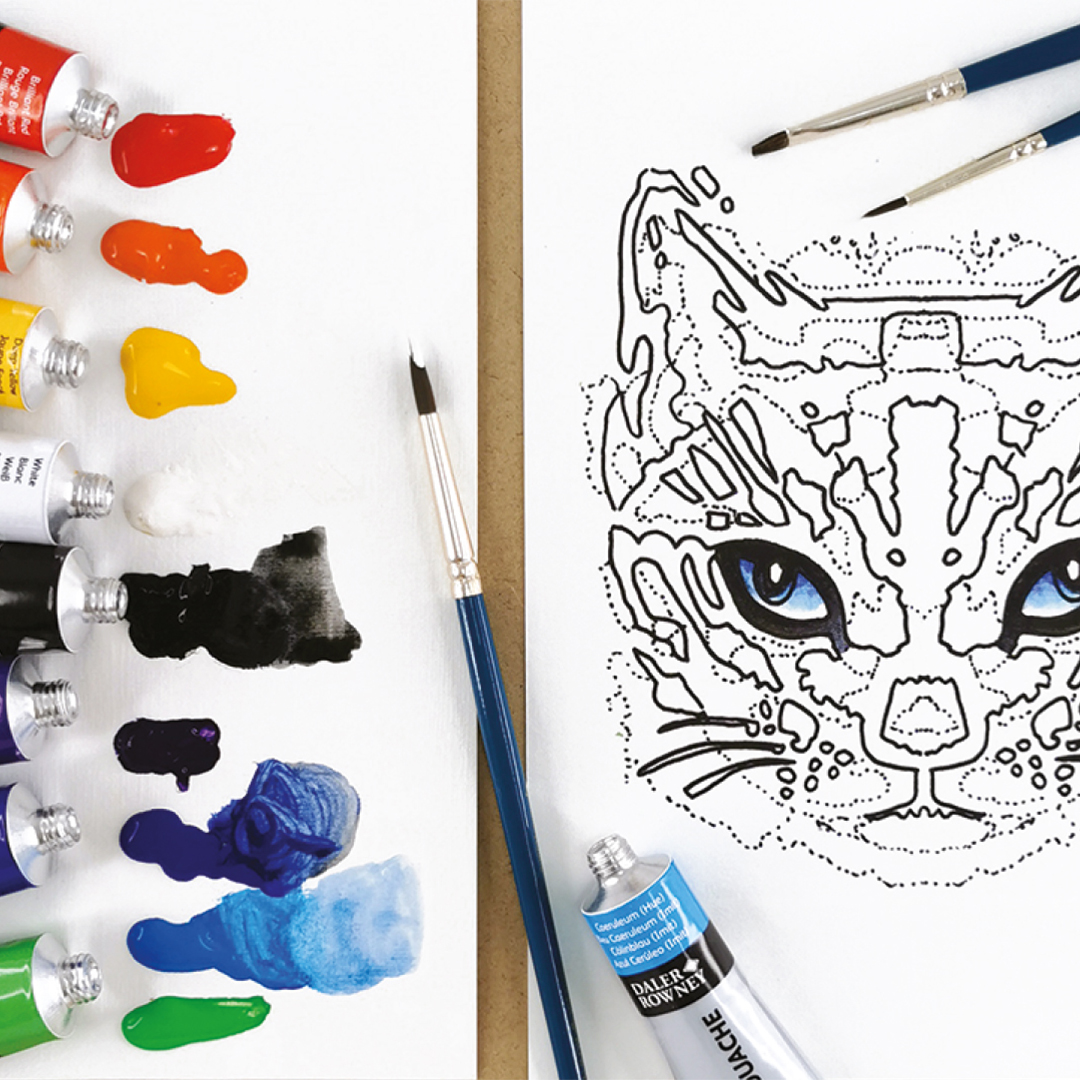
Which gouache is best for you depends on how you want to work, your level of experience and the expression you are looking for. There are many well-loved brands within gouache, and these are some popular series:
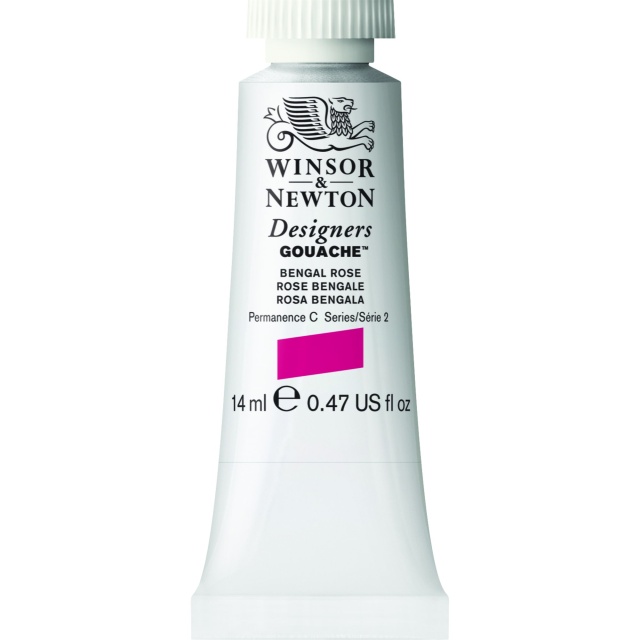
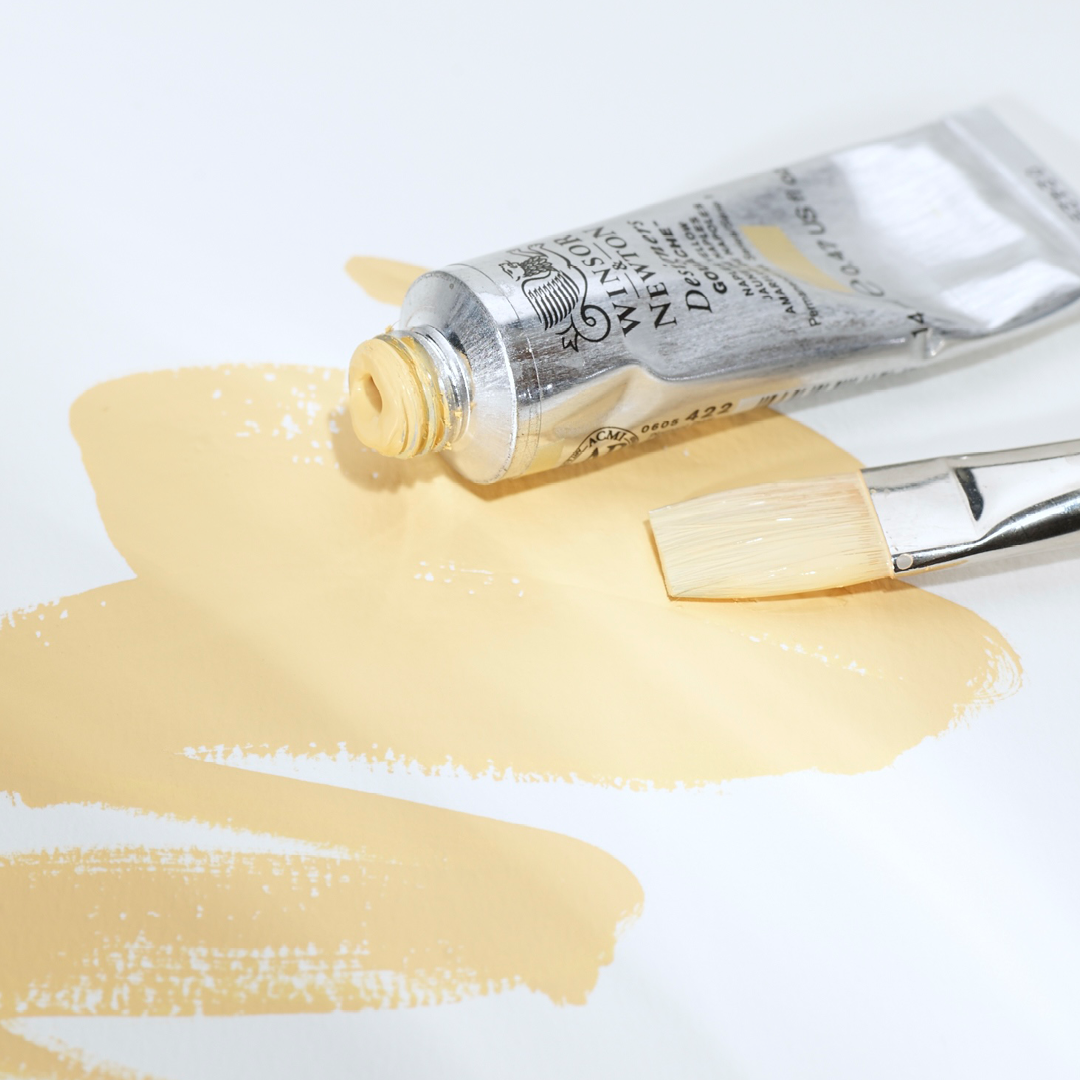
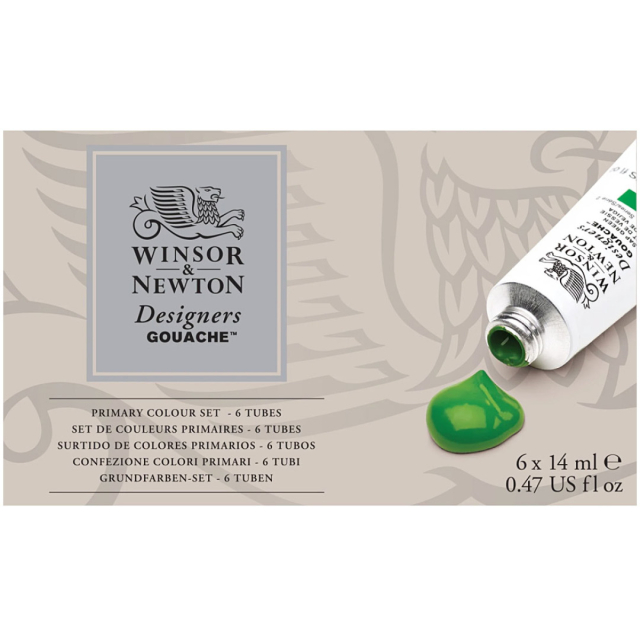
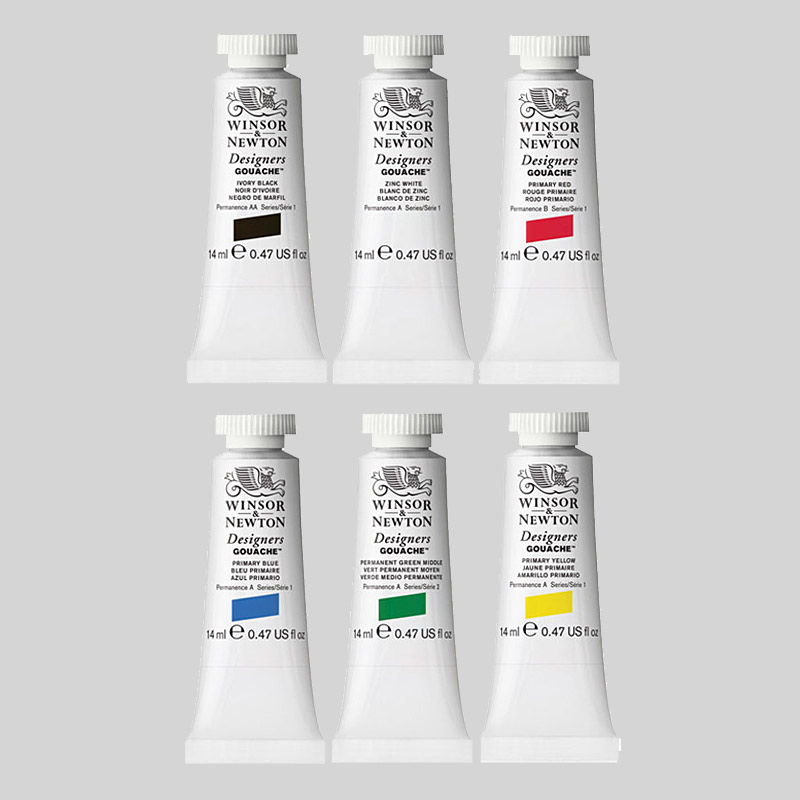
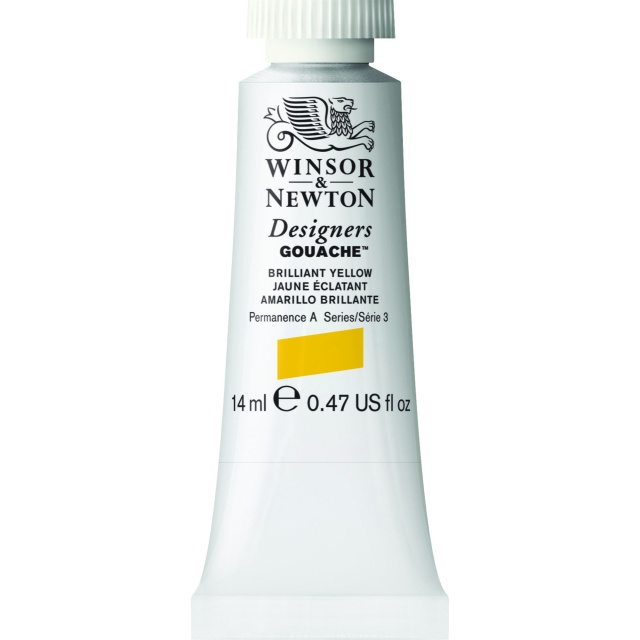
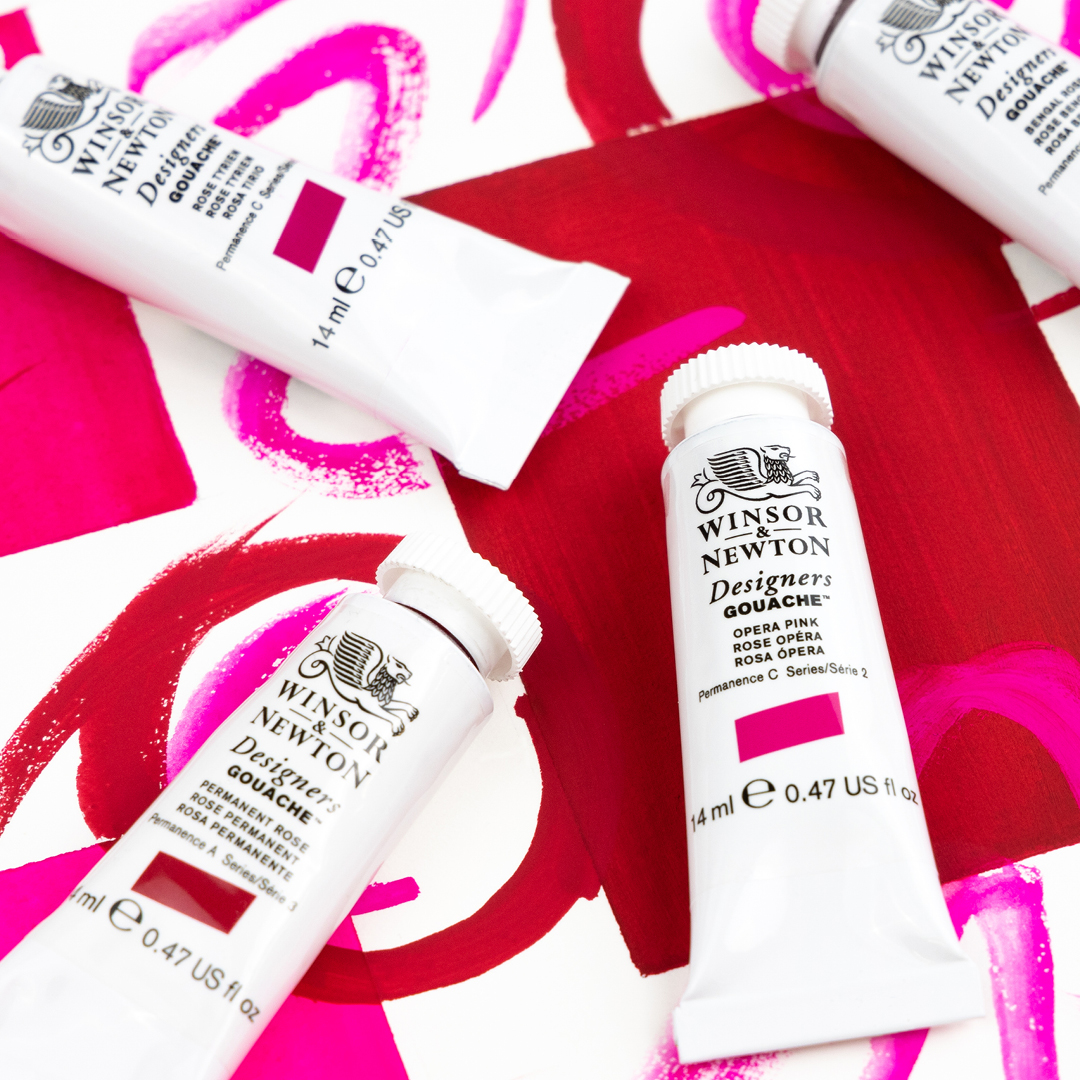
- Winsor & Newton Designers Gouache →
Available individually in many different colours, so you can easily build your own colour palette according to your needs and working style. - Caran d’Ache Gouache Paint Studio →
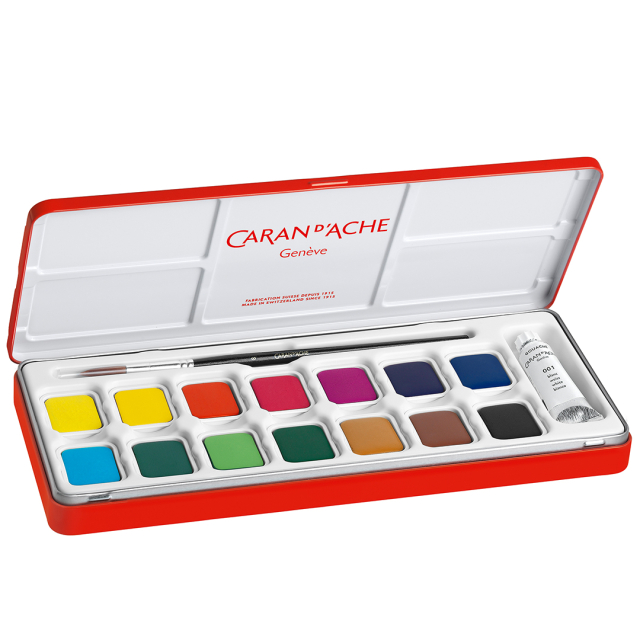
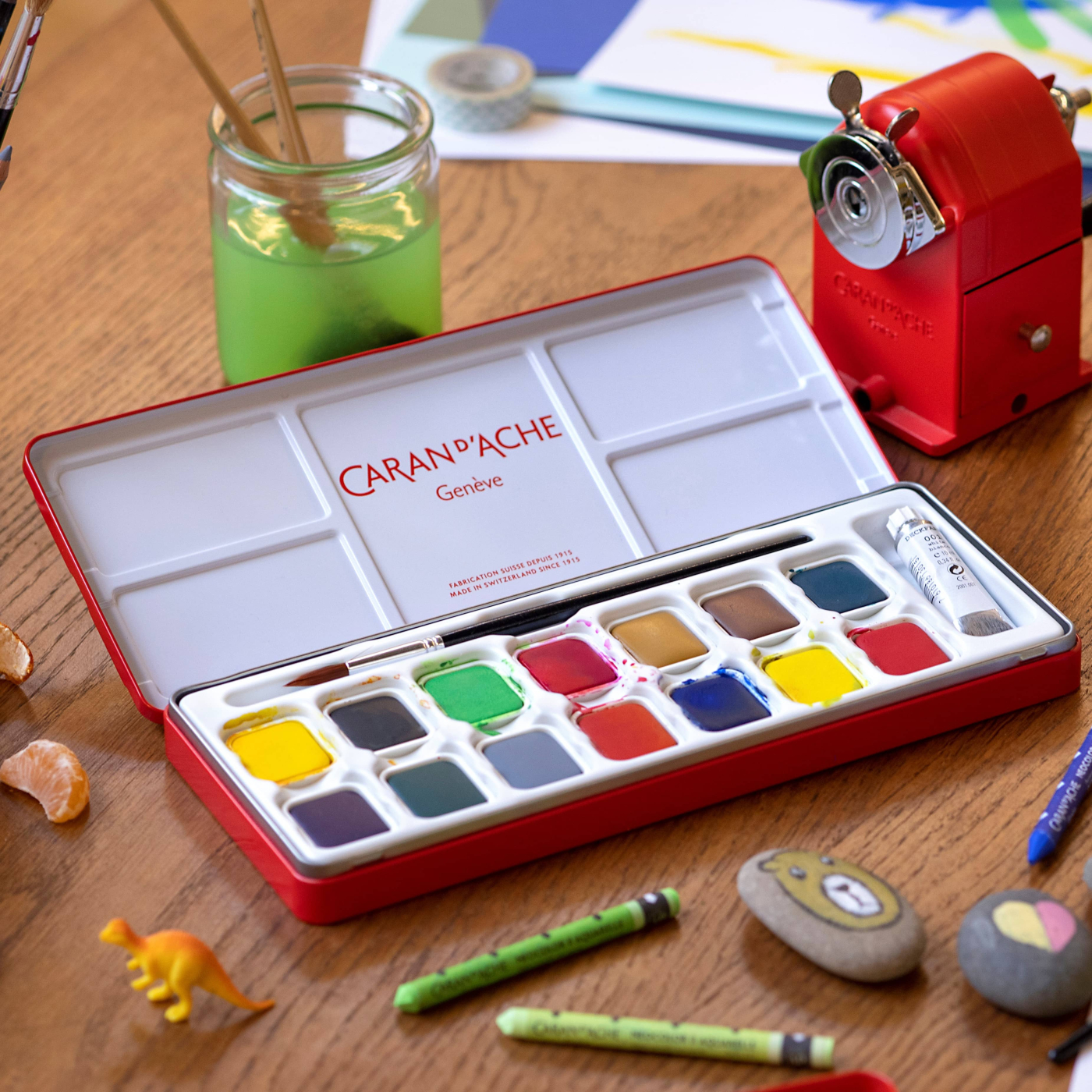
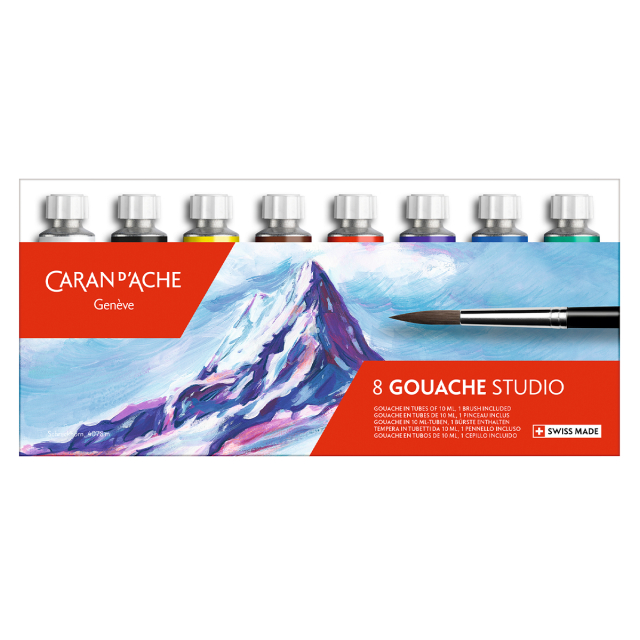
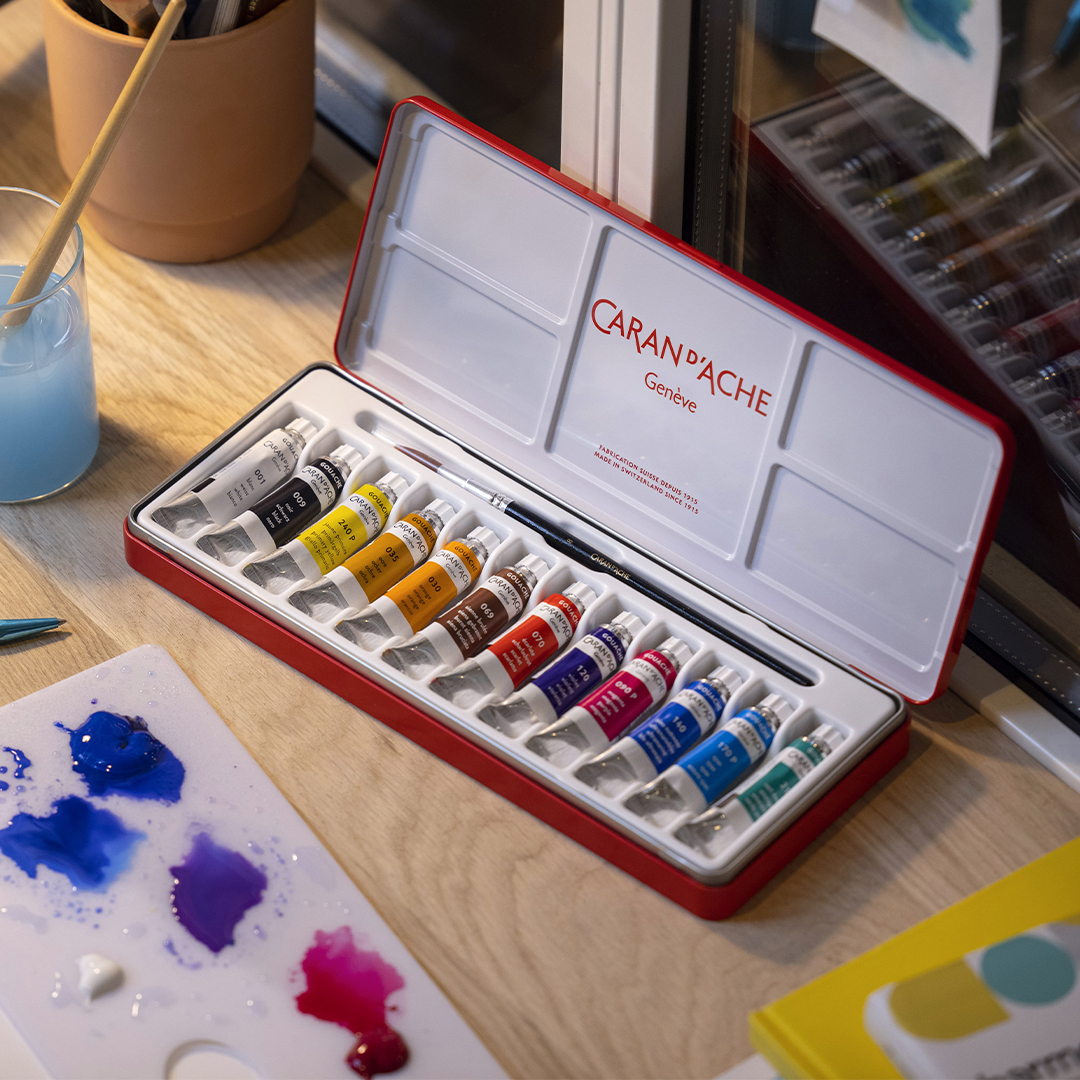
High-quality, professional-grade gouache paint that is often sold in stylish metal tins. - Aquafine Gouache Paint →
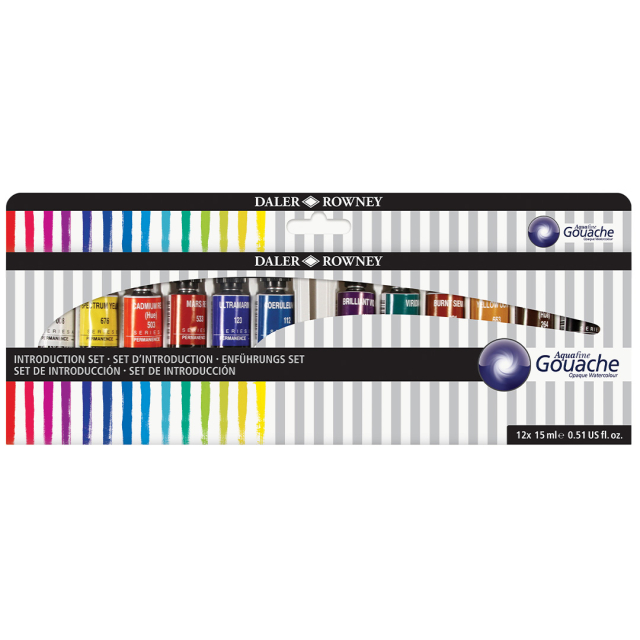
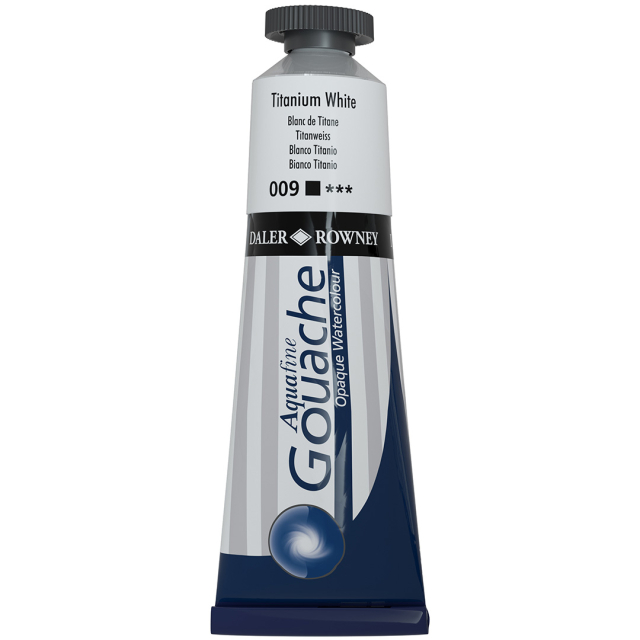
A popular option for both beginners and experienced artists. The colours can be combined with Aquafine watercolour paints and watercolour inks, which are based on the same pigment base, creating a seamless result in mixed media projects.
How do you paint with gouache?
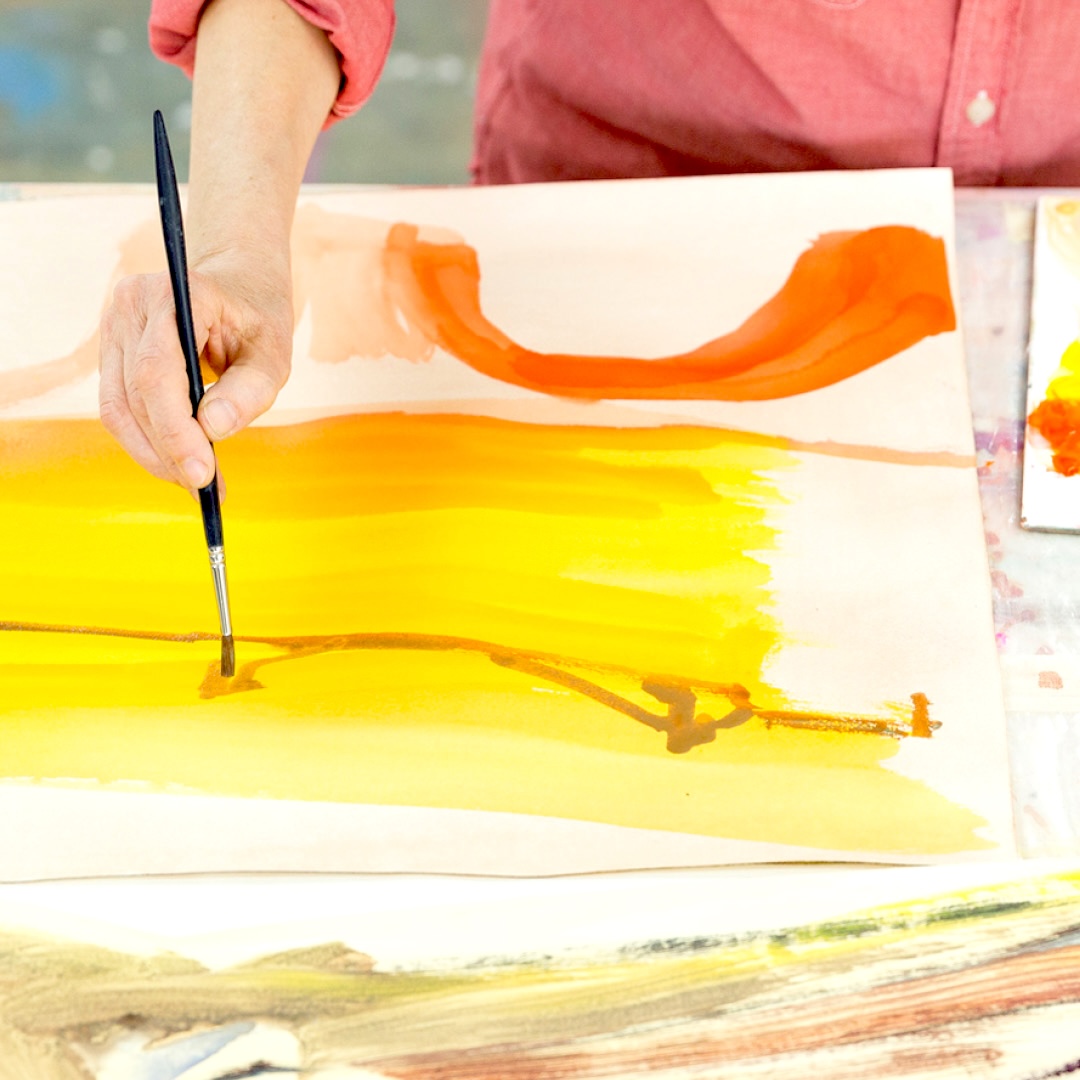
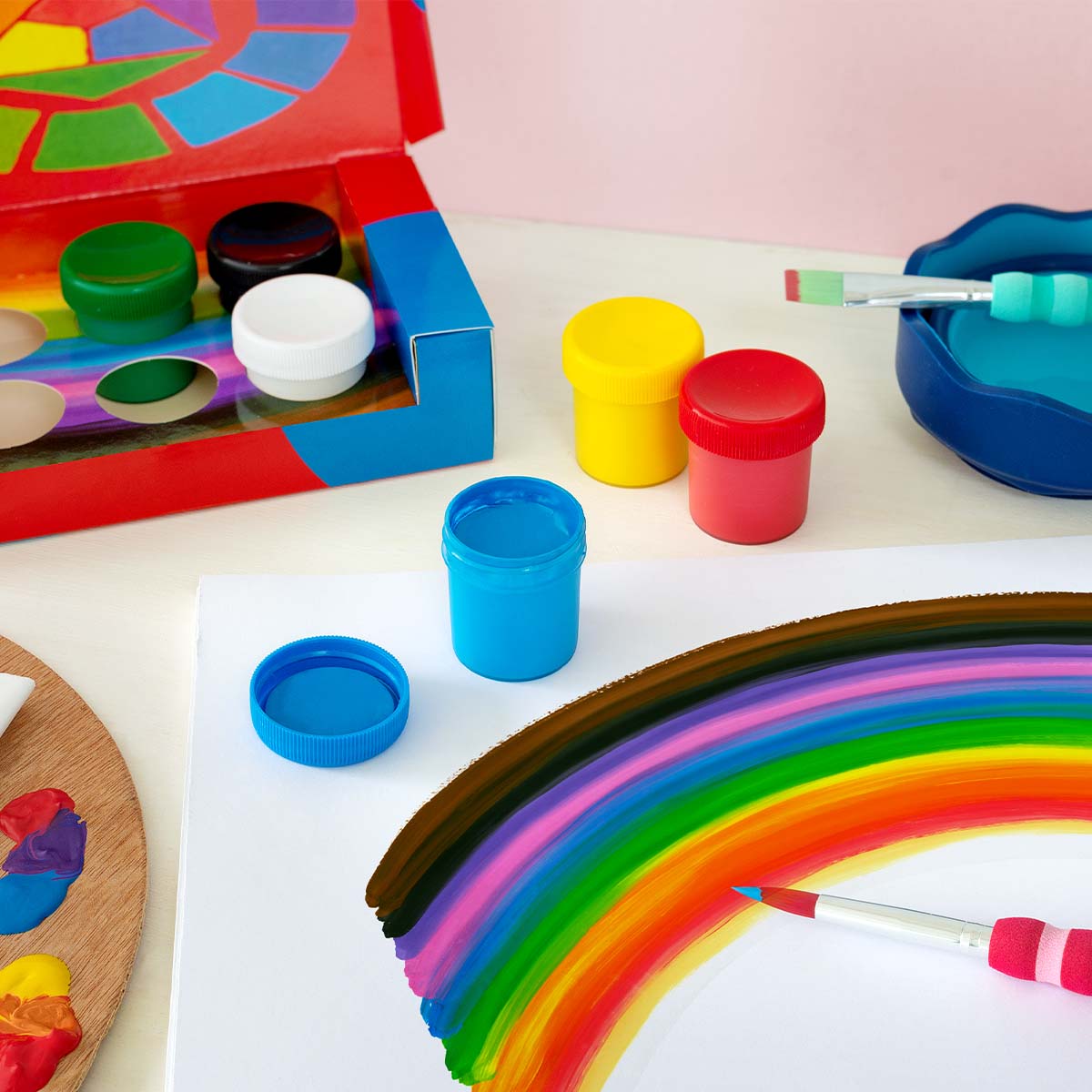
Gouache is used with a brush and water and can be painted both thinly and opaquely depending on the look you want to create. With more water, the paint gives a lighter and more watercolour-like result, while less water creates higher opacity and clearer colour areas. Many people work in layers, building up the motif gradually from thinner paint to more opaque details and highlights. Since gouache can be reactivated with water, it is also possible to adjust and continue working on the painting along the way. Gouache is also often used together with coloured pencils, ink and graphite, especially in illustration, mixed media and sketchbooks, where the matte surface makes details stand out clearly on top of the paint.
What do you need to get started with gouache?
You do not need much to get started with gouache. A few basic materials go a long way when you want to begin experimenting with colour and layering.
- Gouache paint: A smaller starter set with a few basic colours is often enough at the beginning. Gouache is available both in tubes and pans depending on working style and preference.
- Brushes: Soft synthetic brushes work very well with gouache. Many people start with a round brush for details and a flat brush for larger colour areas.
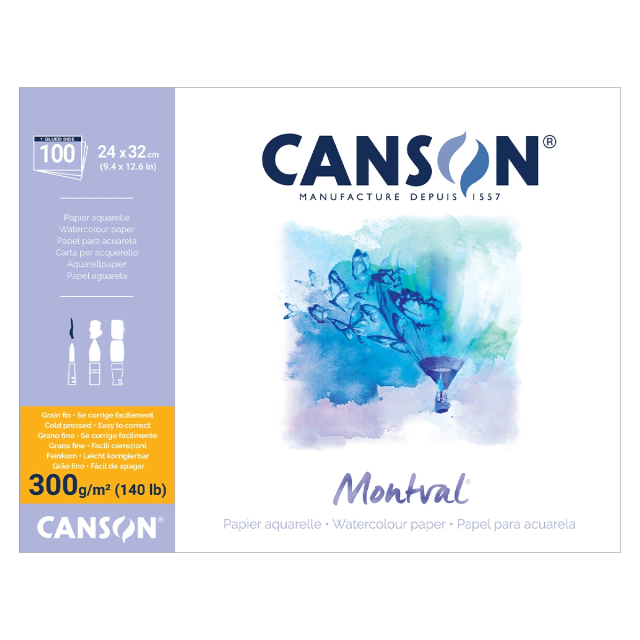
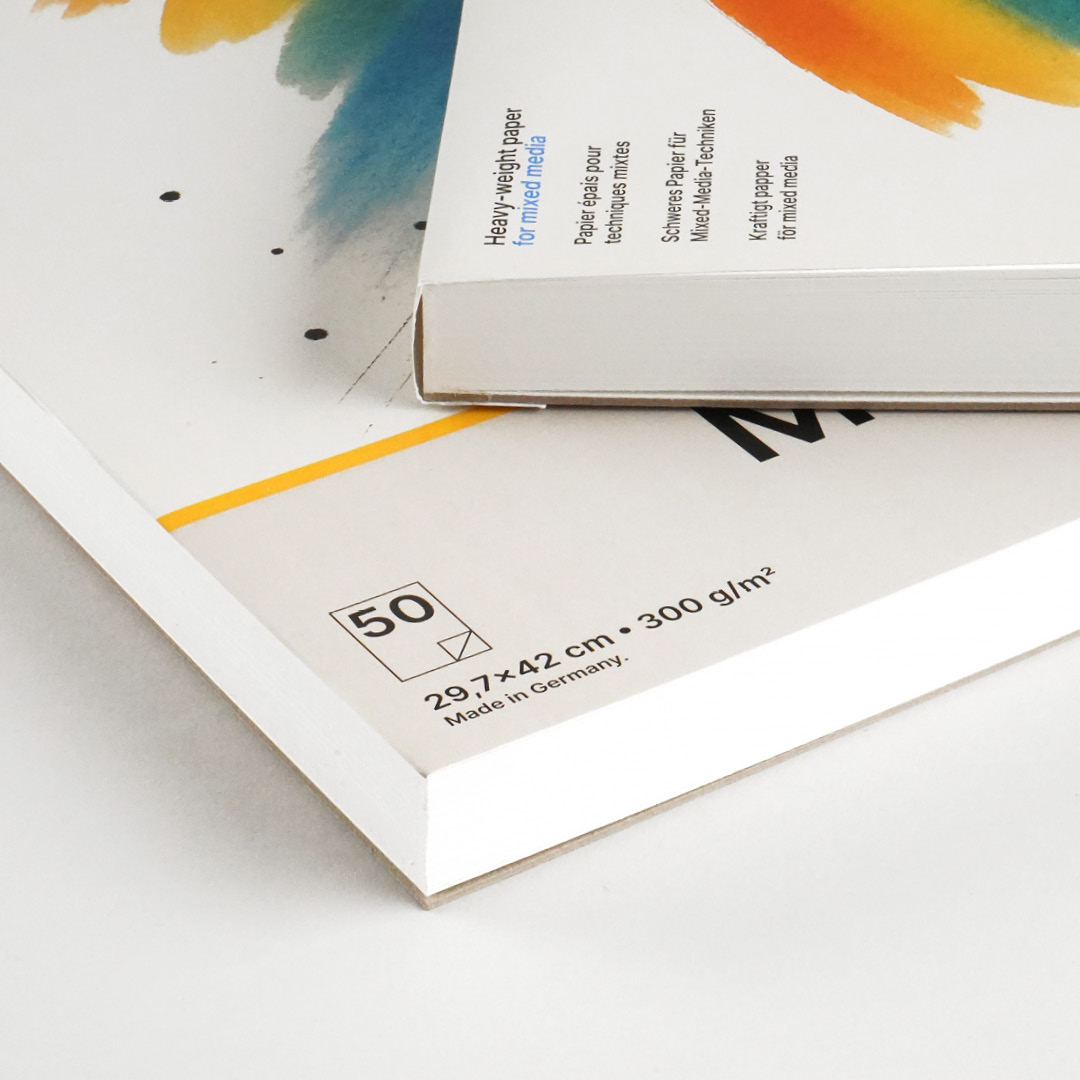
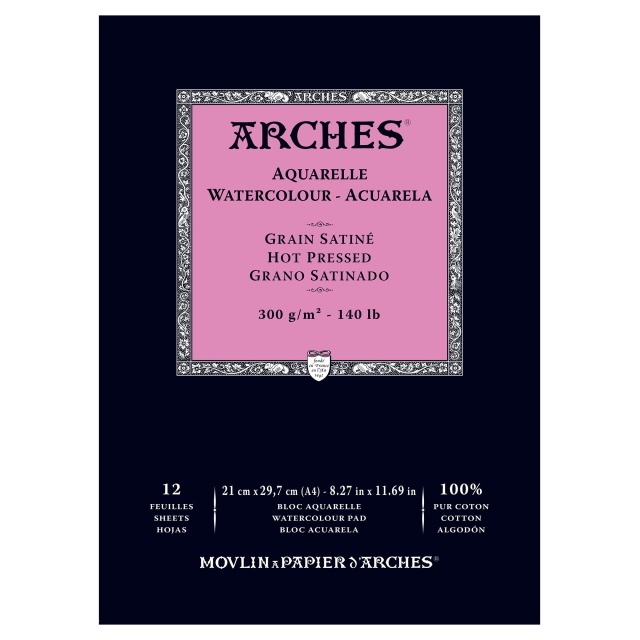
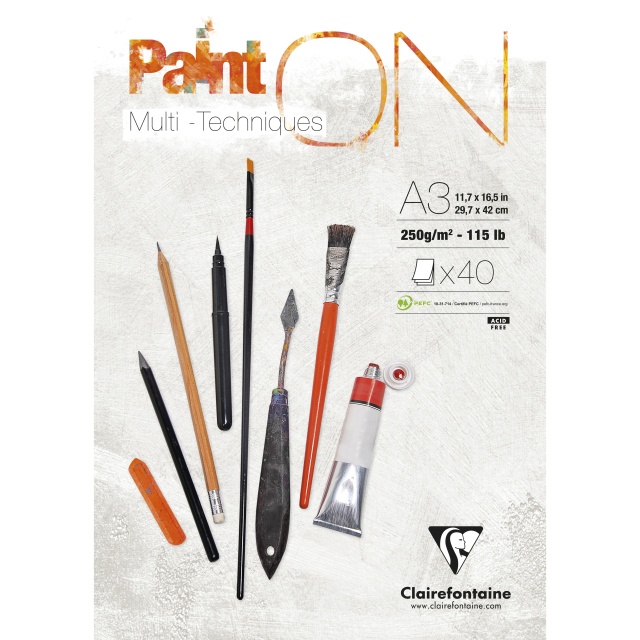
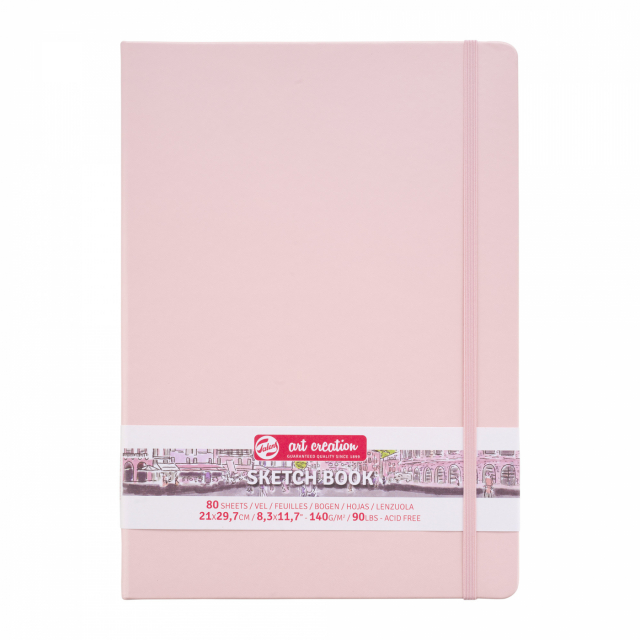
- Paper: A slightly thicker paper works best since gouache is used with water. Watercolour paper and mixed media paper are common choices.
- Palette: A palette with wells makes it easier to mix colours and control the amount of water in the paint. Available in either plastic or porcelain.
- Water container and cloth: Needed to clean brushes and adjust the consistency of the paint while working.
The most important thing is not really to have lots of materials, but to start trying the technique and find a way of working that feels fun and natural.
Which surfaces are suitable for gouache?
Gouache is most often used on paper, but the technique also works on several other surfaces. Since the paint is used with water, it is important that the surface can handle moisture without buckling or breaking. Different surfaces also affect how the paint behaves and what kind of expression the painting gets.
Which paper should you use for gouache?
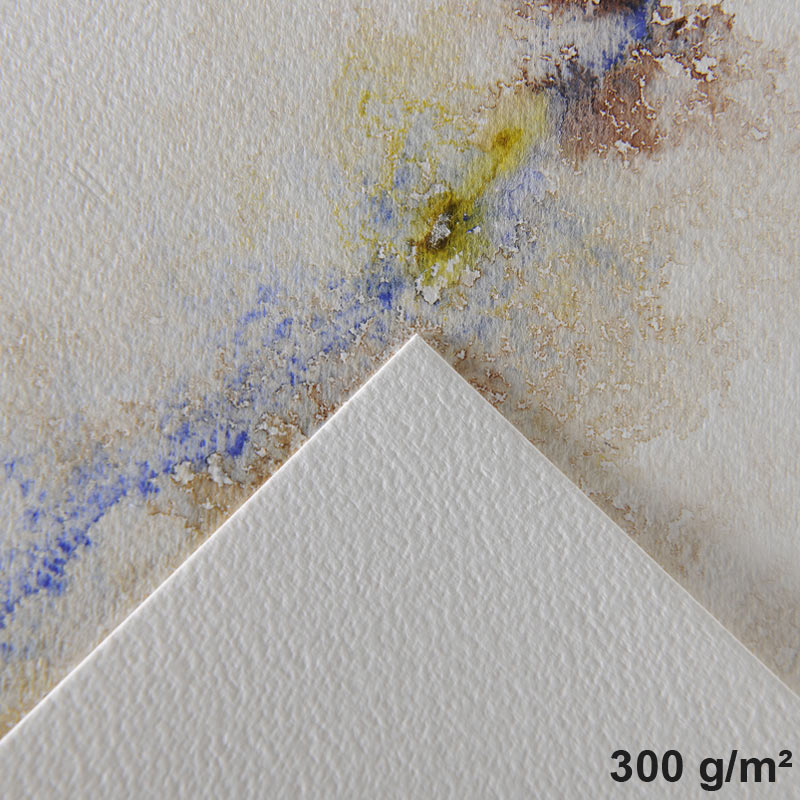
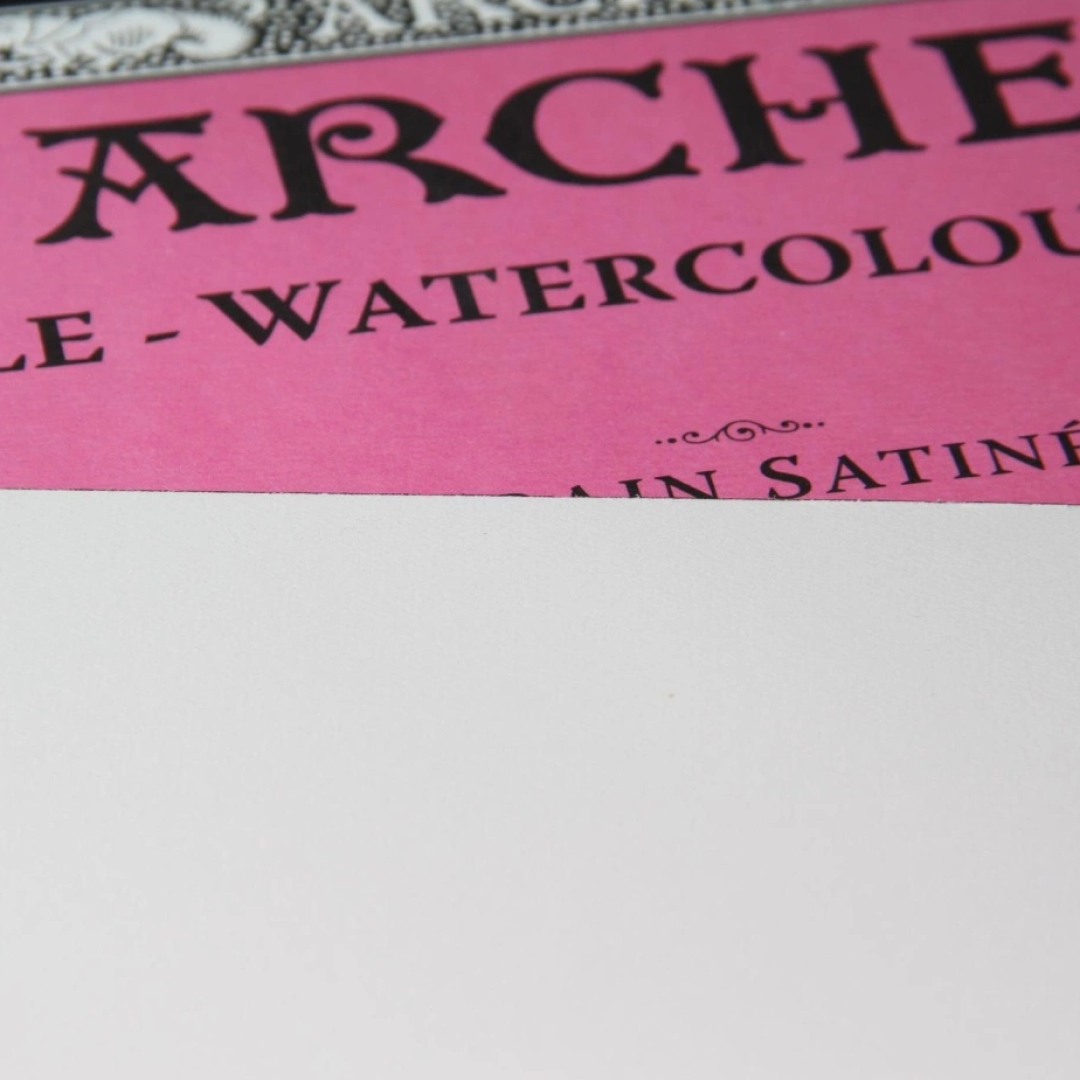
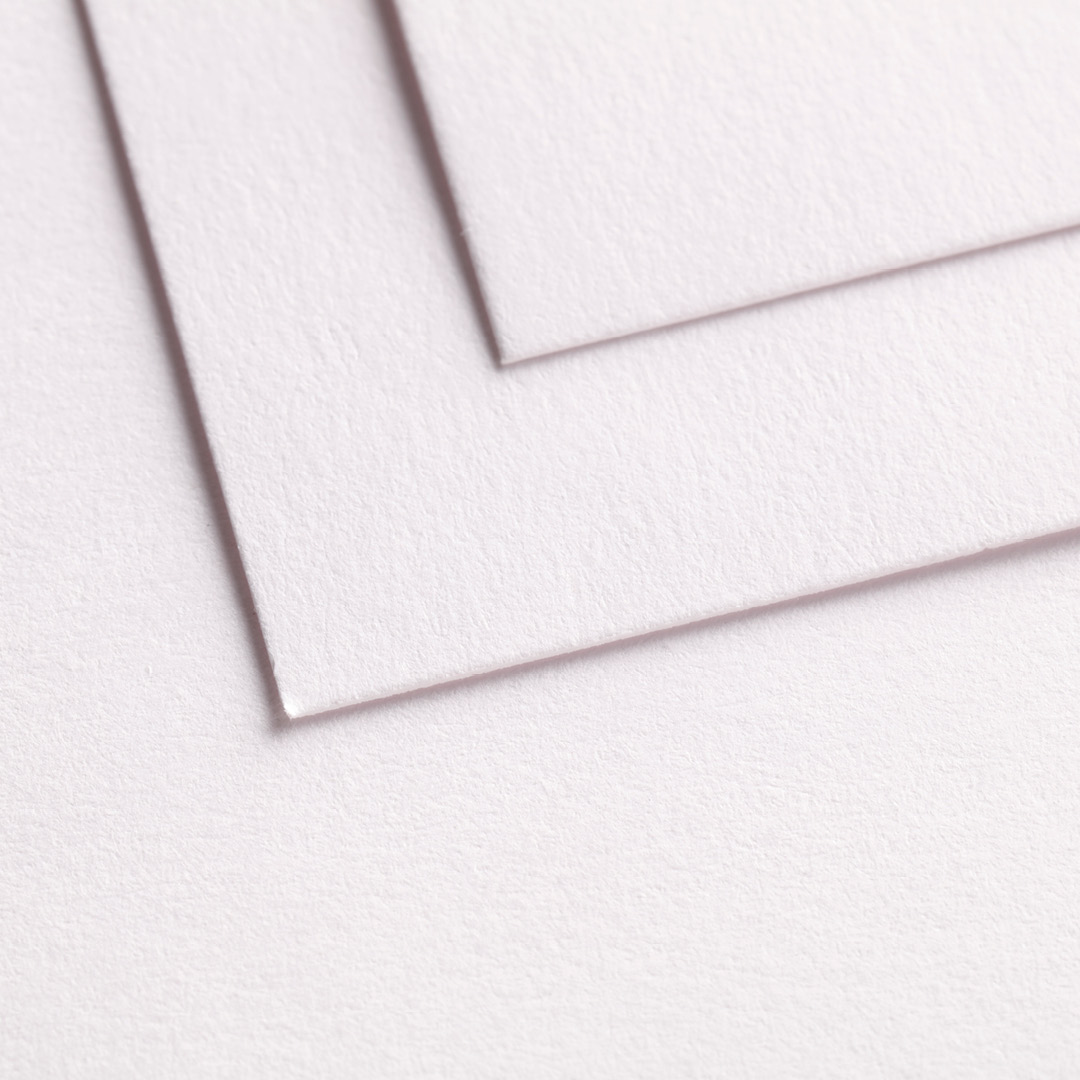
Watercolour paper is one of the most common choices for gouache because it is made to withstand water and several layers of paint. Many choose paper with a weight of around 200–300 gsm to reduce the risk of buckling.
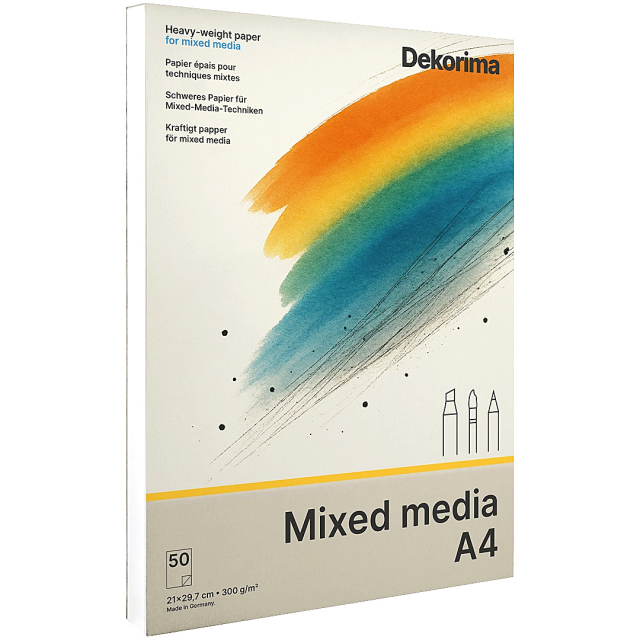
Mixed media paper also works well, especially for sketchbooks and creative projects where gouache is combined with ink, graphite or coloured pencils.
The surface texture of the paper affects both the feel and the result of the painting. Smoother, hot pressed paper often works well for illustrations and details because brushstrokes become more even. Cold pressed paper has more texture and gives a softer, livelier expression where the grain of the paper shows through the paint.
Gouache on canvas and coloured surfaces
Gouache can also be used on canvas, painting boards and other sturdier surfaces. Since the paint is opaque, it also works well on white, coloured and black paper, which makes the technique popular for illustration and mixed media.
Gouache compared with other paints
Gouache is often compared with both watercolour and acrylic because these paints share certain properties. At the same time, gouache has its own expression that makes it especially popular in illustration, design and creative painting.
What is the difference between gouache and watercolour?
Gouache and watercolour are both water-based paints that can be used in thin layers and reactivated with water after drying. The main difference is that gouache is much more opaque thanks to its higher pigmentation and opaque character.
With watercolour, you often work transparently and let the paper shine through the paint to create highlights and white areas, while gouache makes it possible to paint light colours on top of dark ones. Gouache also dries to a completely matte finish, while watercolour often feels lighter and more transparent in expression.
| Gouache | Watercolour | |
|---|---|---|
| Coverage | Opaque and covering | Transparent |
| Finish | Matte and velvety | Light and transparent |
| Layering | Light colours can be layered over dark ones | You usually work from light to dark |
What is the difference between gouache and acrylic?
Acrylic paint becomes water-resistant once dry, while gouache remains water-soluble and can be reactivated with water. Acrylic also adheres to more surfaces, such as canvas, wood, plastic and ceramic, and is often used for larger paintings and more texture-based painting.
Gouache instead has a softer and more even expression, where brushstrokes blend into matte colour areas without much texture. The paint is often used on paper or board and is especially appreciated in illustration, where clean colour areas and clear details are in focus.
| Gouache | Acrylic | |
|---|---|---|
| Water solubility | Can be reactivated with water | Becomes permanent once dry |
| Finish | Matte and even | Can be glossy and textured |
| Surfaces | Paper or canvas | Paper, canvas, wood, plastic and more surfaces |

Frequently asked questions about gouache
Is gouache waterproof?
No, traditional gouache is not waterproof. Because the paint is water-soluble, it can be reactivated with water even after it has dried. This makes the technique flexible, but also means finished paintings should be protected from moisture.
Can gouache dry out?
Yes, gouache can dry out, especially if the tube is not properly closed. Dried gouache can often be saved by adding a little water and working the paint back up again, but the consistency may be slightly different from when the paint was fresh.
Is gouache good for beginners?
Yes, gouache is well suited to beginners because the paint is easy to mix, can be painted over and can be used both thinly and opaquely. It is a forgiving technique where you can experiment without every brushstroke needing to be perfect straight away.
Can you use gouache together with watercolour?
Yes, gouache and watercolour work well together because both are water-based. Watercolour can be used for transparent layers and soft transitions, while gouache can be added on top for more opaque details and clearer colour areas.
Do you need special brushes for gouache?
No, you do not need special brushes just for gouache. Soft synthetic brushes, watercolour brushes and hobby brushes all work very well, preferably in different shapes and sizes depending on whether you want to paint details, broad colour areas or soft transitions.
Can you use gouache on black paper?
Yes, gouache works well on black paper because the paint is opaque. Light and bright colours can show clearly against dark surfaces, especially if the paint is used with less water for higher opacity.

Gouache →
Brushes →
Watercolour paper →